
Smart Ways to Build With No-Code
We use Figma, Framer, Bubble and AI to launch delightful digital products. Have a read of our helpful guides below.



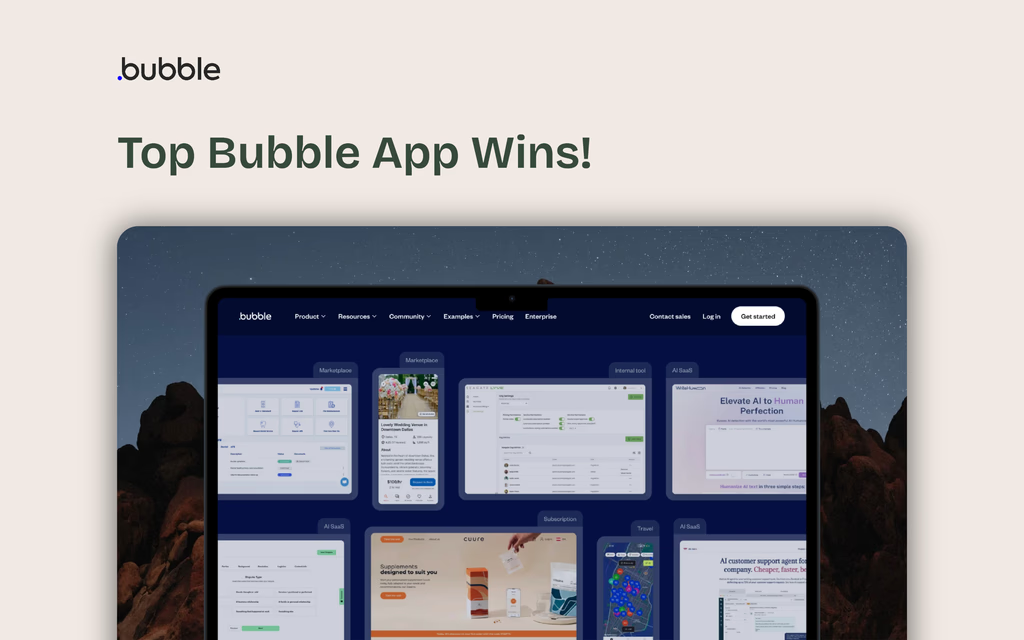
HereBubble Success Stories: The Most Successful Bubble App Examples
Bubble has quietly become the most powerful no-code platform for SaaS founders. In the last five years, hundreds of products have moved beyond “MVP prototypes” and scaled into multi-million-dollar businesses, enterprise-grade platforms, and even VC-backed success stories.
24 febeary,2026
All Blogs
Framer vs Webflow 2026: Which Should You Choose?
Frequently Asked Questions (FAQs)
Can Bubble handle 100K MAU?
Yes, but ‘can’ depends on how the product is built. Apps that reach that scale separate the UI layer (Bubble) from heavy compute and use server-side summarisation and pagination. For example, teams that reported large concurrent usage used caching layers, background summarisation jobs, and selective data denormalisation to keep UI queries fast.How do I keep WU usage predictable?
Design for predictability: queue heavy workflows, avoid repeating searches, throttle actions, cache expensive results, and monitor WU per event. Use server-side endpoints for logic that would otherwise trigger many database hits.Should I use Bubble’s native mobile builder or a wrapper?
If native mobile features are core, plan for native or a robust wrapper from day one. If mobile is secondary, a mobile-optimized web app or wrapper is faster to launch. Many teams start with a wrapper and go native once metrics justify it.Is vendor lock-in a risk with Bubble?
Vendor lock-in is real, but manageable. Adopt an API-first mindset: design systems so that data and business logic can be called via APIs. Keep your export strategy ready (regular backups, exportable data models). Most teams migrate incrementally: replace bottleneck microservices first and keep Bubble as the orchestration/UI layer until costs or scale force deeper migration.What types of successful businesses have been built on Bubble?
Multi-million-dollar SaaS products, enterprise platforms, and VC-backed startups across every vertical: marketplaces, internal tools, edtech, fintech, health, travel, real estate, and HR/recruitment. Want to join them? Goodspeed builds production-ready Bubble apps across all these industries.How can I tell if a Bubble app is truly scalable and production-ready?
Look for real traction: usage metrics, revenue data, funding, enterprise adoption, and press coverage. Technical indicators include WU optimization, performance discipline, proper security posture, and architecture that separates UI from heavy compute. These qualities separate scalable businesses from abandoned MVPs.What are the common patterns used by successful Bubble apps at scale?
Separate UI from heavy compute, use server-side pagination and caching, run background jobs for intensive tasks, apply selective data denormalization, and integrate external systems via APIs. Convert synchronous workflows to queued jobs and avoid operations that cause excessive database hits.
Bubble Success Stories: The Most Successful Bubble App Examples
But here’s the problem: the market is noisy. Some “Bubble apps” are student projects, others are abandoned MVPs, and only a select few demonstrate true scale, traction, and repeatable playbooks.

Bubble Success Stories: The Most Successful Bubble App Examples
We evaluated apps with a discipline similar to an investor or enterprise technical buyer. The goal: include only live products where Bubble remained a material part of the stack and where there was credible evidence of real users, revenue, growth, or enterprise adoption.
